
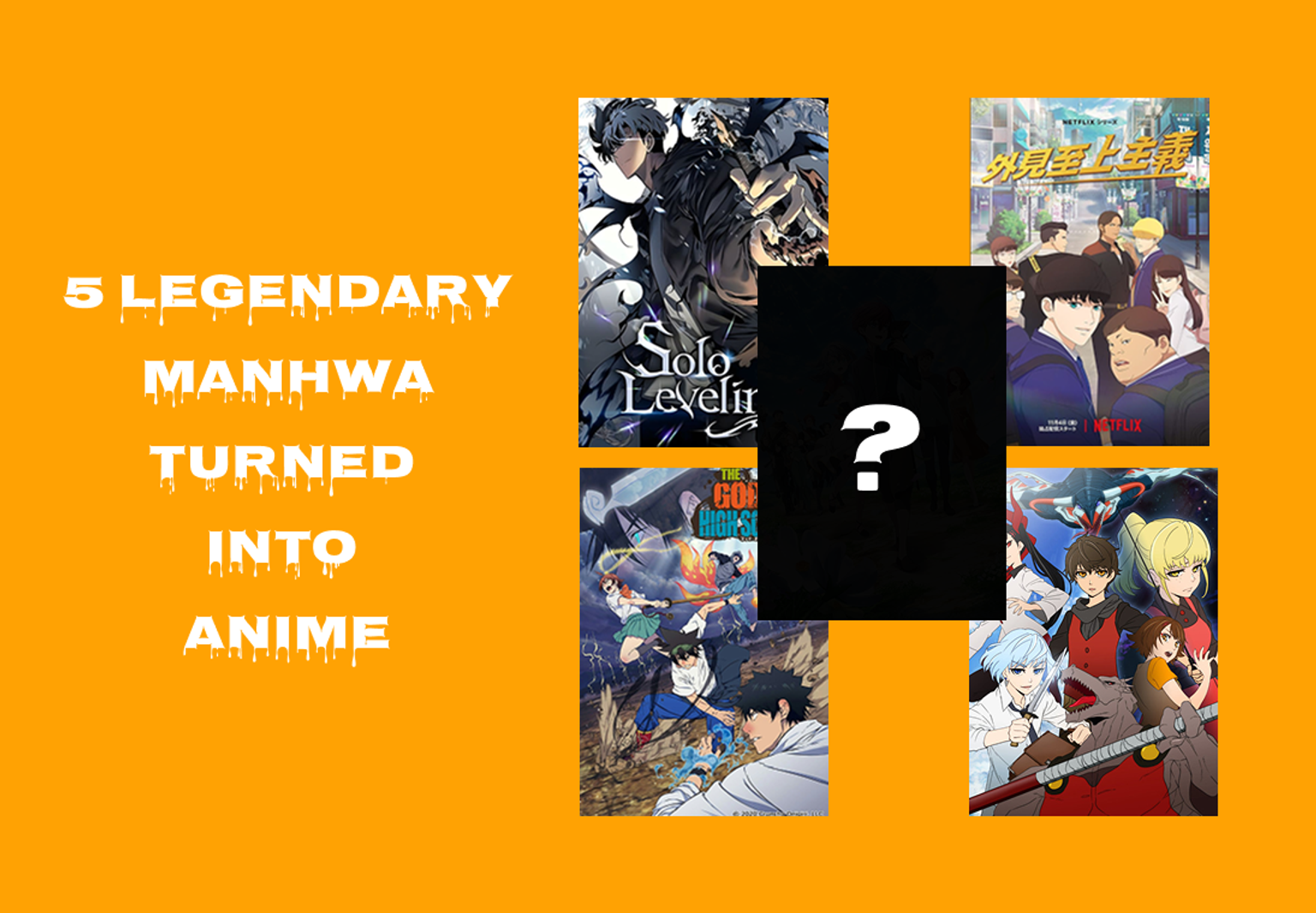
For years, the word anime was synonymous with Japanese manga.
If you wanted to see your favorite panels come to life, you looked to Tokyo.But the tides have shifted. We are officially living in the era of the Manhwa Revolution.
From the shadow-drenched dungeons of Solo Leveling to the mysterious heights of Tower of God, some of the most anticipated shows on our screens are now coming straight from the scroll. But as any true fan knows, a great webtoon doesn’t always guarantee a great anime.
While Solo Leveling may be the current king of hype, it didn’t start the fire.
To understand how we got here, we have to look at the pioneers — the adaptations that proved manhwa could stand toe-to-toe with shonen giants like Naruto or Bleach.
Keep in mind, the titles I’m breaking down today are just the tip of the spear. There’s a massive world of adaptations out there — from the gritty streets of Viral Hit to the royal drama of Raeliana — but these five are the essentials you need to know first.
Today on TheManhwaDude, we’re analyzing the heavy hitters that made the jump from webtoon to TV.
5 - Lookism
I’ll be honest: I was skeptical when I heard Netflix was adapting Lookism.
The early manhwa art is famously rough compared to the polished style it has today, and I wasn’t sure an anime could capture that heavy social commentary without feeling cringey. I’m happy to say I was wrong.
The Adaptation:
Studio Mir did an excellent job modernizing the character designs while preserving that gritty, early-Lookism soul. What really surprised me was the music — since the School Festival arc plays such a big role, hearing the songs fully performed added emotional weight the webtoon simply couldn’t deliver. I also appreciated that the anime didn’t sugarcoat the bullying; it felt just as uncomfortable and raw as when I first read it.
The Verdict:
This is the most accessible entry point for new fans. Watch the anime for the emotional impact and fantastic OST — but be warned: it stays firmly in the slice-of-life phase. If you want the gang-war epic Lookism eventually becomes, you’ll need to head back to the scroll after the finale.
4 - Tower of God
Tower of God was one of the first major Crunchyroll Originals to adapt a webtoon, and it made a bold artistic choice right out of the gate.
The sketchy, hand-drawn style divided fans, but in my opinion, it perfectly captured the eerie, otherworldly feeling of the early chapters.
The Adaptation:
The anime excels at portraying the emotional tension between Bam and Rachel, supported by one of the most memorable soundtracks in modern anime. However, to fit into a 13-episode format, it had to trim a significant amount of lore — especially regarding Shinsu mechanics and side-character backstories.
The Verdict:
Watch it for the atmosphere and the music. Read the manhwa if you want the deep, intricate world-building the anime simply didn’t have time to explore.
3 - The God of High School
If you want to see what happens when a studio like MAPPA is handed a martial-arts playground, this is it.
I went in expecting top-tier action — and I wasn’t disappointed. As a reader, though, I immediately felt how fast the story was moving.
The Adaptation:
Visually, this is a masterclass. The motion-captured combat makes Mori Jin’s Renewal Taekwondo feel far more visceral than static panels ever could. Unfortunately, the pacing is brutal. Over 110 chapters were compressed into 13 episodes, and a lot of character depth and emotional buildup didn’t survive the cut.
The Verdict:
A visual masterpiece with a missing soul. Treat this as the ultimate hype reel — watch the anime for the god-tier animation and adrenaline, then start the manhwa from Chapter 1 if you actually want to understand the characters and lore.
2 - The Beginning After the End
Arthur Leywin’s journey hitting the screen is a huge moment for the community — and now that the anime is officially airing, it finally feels real.
After years of anticipation, The Beginning After the End has begun its anime run, bringing Arthur’s reincarnation story to life and introducing Dicathen to an even wider audience. For long-time readers, seeing key moments animated is both surreal and deeply satisfying.
The Adaptation:
So far, the anime has focused heavily on Arthur’s early life and reincarnation, giving his growth the time and care it deserves. While pacing has been a concern among readers, seeing his progression in motion adds emotional weight that’s hard to replicate on the page. The animation helps ground quieter moments — family, training, and responsibility — just as much as the action.
The Verdict:
This isn’t just another isekai — it’s a masterclass in long-form world-building. Whether you start with the anime or return to the manhwa for deeper context, The Beginning After the End is shaping up to be one of the most important manhwa adaptations currently airing.
1 - Solo Leveling
I was terrified and excited when I heard Solo Leveling was getting an anime.
How do you animate an art style so iconic it practically defined modern manhwa visuals? After watching Jin-Woo’s journey brought to life by A-1 Pictures, I can confidently say: the System delivered.
The Adaptation:
The atmosphere hooked me immediately. While the anime trades the manhwa’s glowing aura effects for a sleeker, more cinematic approach, it works beautifully in motion. What truly elevates it, though, is the music. Hearing Hiroyuki Sawano’s soundtrack during a boss fight adds a level of hype scrolling alone could never replicate. I also appreciated the earlier introduction of side characters, which made the world feel more alive than it did in the opening chapters of the manhwa.
The Verdict:
You read Solo Leveling for the god-tier art. You watch it for the adrenaline.
The anime makes you feel the weight of Jin-Woo’s growth — but I still keep the manhwa on my phone just to admire those iconic full-page illustrations.
It’s a wild time to be a fan.
I remember when we were lucky to even get fan translations — and now I’m watching Sung Jin-Woo shout “Arise” on a 55-inch TV. It’s surreal.
At the end of the day, whether you prefer the quiet detail of the scroll or the heart-pounding music of the screen, the core remains the same: storytelling. Korean creators are no longer knocking on the door — they’re kicking it down.
Stay hyped, and keep scrolling.