
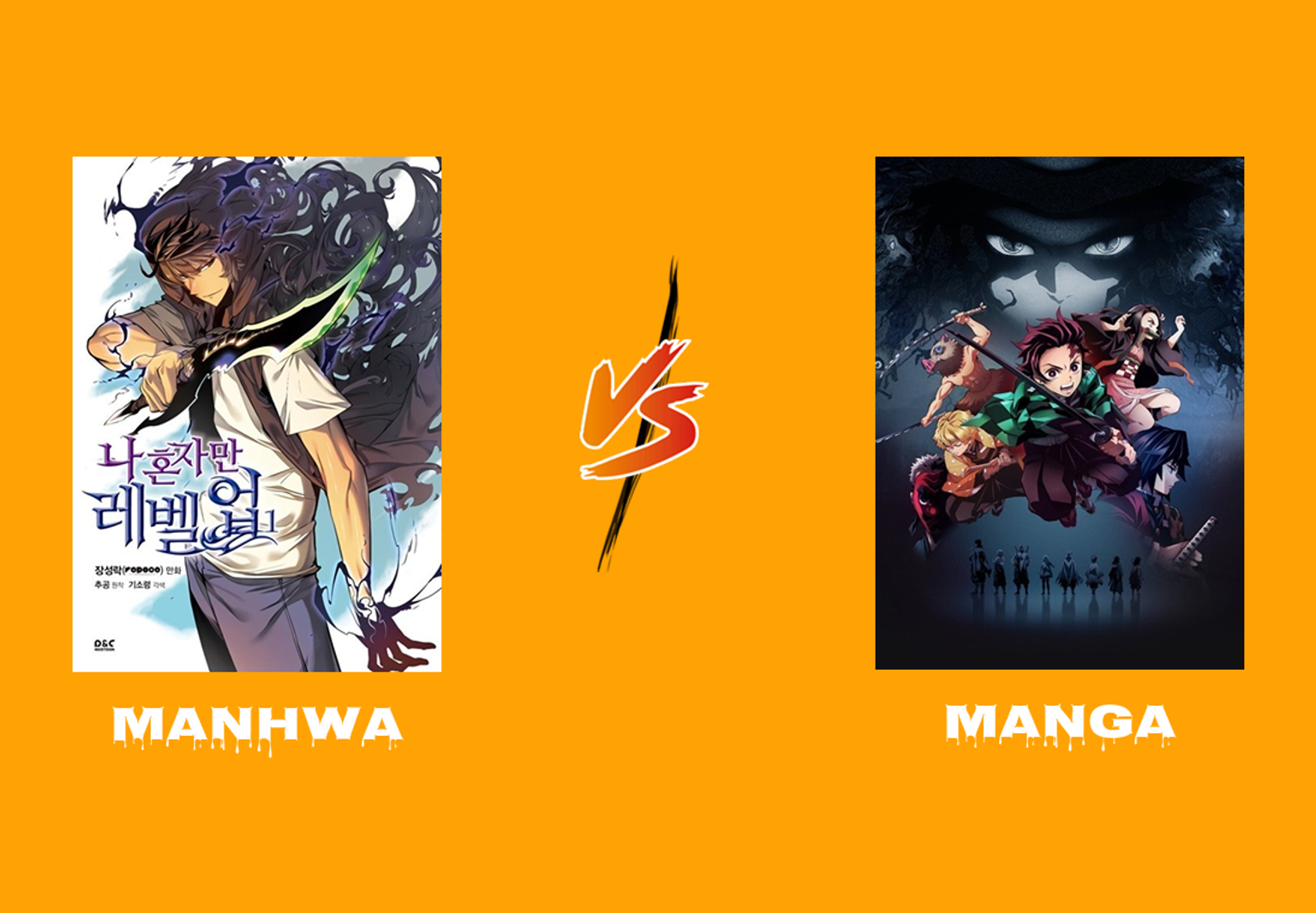
Manhwa vs Manga: What’s the Difference?
Manhwa and manga are often confused, especially by new readers discovering comics through webtoons, anime, or social media. At first glance, both involve illustrated storytelling, serialized releases, and similar genres. But despite these surface similarities, manhwa and manga are fundamentally different mediums shaped by distinct cultures, industries, and reading habits.
Manga refers to comics created in Japan, while manhwa refers to comics created in South Korea. The difference goes beyond geography. From reading direction and visual presentation to publishing models and storytelling structure, each medium evolved in its own way. Understanding these differences helps explain why reading manhwa feels so different from reading manga, even when the genres overlap.
This guide breaks down manhwa vs manga clearly and practically, focusing on what actually matters to readers today rather than academic definitions. Whether you’re coming from manga and curious about manhwa, or discovering both for the first time, this comparison will help you understand how they differ and which one might suit your preferences best.
Origins and Definitions
Manga and manhwa share visual similarities, but they originate from different countries and cultural contexts. Manga refers to comics created in Japan, while manhwa refers to comics created in South Korea. Although both words historically mean “comics” in their respective languages, each medium evolved within a distinct publishing and cultural environment.
Manga has a long-established print tradition in Japan. For decades, it has been primarily published in black-and-white, serialized in weekly or monthly magazines, and later collected into physical volumes. This print-centric model shaped how manga stories are paced, illustrated, and consumed, with a strong emphasis on page layout and panel composition.
Manhwa, while also rooted in print, followed a different trajectory. As South Korea rapidly expanded its internet infrastructure in the late 1990s and early 2000s, manhwa began shifting toward digital platforms. This transition gave rise to webtoons, which were designed specifically for online and mobile reading. As a result, modern manhwa is closely associated with digital publication, full-color artwork, and vertical scrolling formats.
Another key difference lies in industry structure. Manga remains heavily tied to traditional publishing houses and print circulation, even as digital manga grows. Manhwa, on the other hand, is largely platform-driven, with creators publishing directly through online services that prioritize accessibility and frequent updates. These foundational differences help explain why manga and manhwa feel distinct, even when they explore similar genres or themes.
Reading Format and Visual Style
One of the most noticeable differences between manhwa and manga is how they are read and presented visually. These differences are not cosmetic; they directly shape the reading experience.
Manga is traditionally read from right to left, following the Japanese writing system. Pages are designed with printed layouts in mind, and most manga is published in black and white. This approach emphasizes line work, shading, and panel composition, with artists carefully balancing detail and readability across each page.
Manhwa, especially in its modern form, is typically read left to right and designed for vertical scrolling rather than page turns. Most digital manhwa is published in full color, with layouts optimized for smartphones and tablets. Panels are often spaced vertically, allowing scenes to breathe and giving emotional moments more visual impact as the reader scrolls downward.
These format differences influence pacing. Manga often packs multiple panels into a single page, encouraging faster reading and denser storytelling. Manhwa, by contrast, tends to use fewer panels per screen, relying on spacing, color, and scroll timing to build tension and highlight key moments. This makes manhwa feel more cinematic and accessible, particularly for readers accustomed to digital media.
Visual style also reflects these formats. Manga’s black-and-white aesthetic has become iconic, while manhwa’s use of color allows for dramatic lighting, detailed environments, and expressive character designs. Neither approach is inherently better, but they cater to different reading habits and preferences shaped by print versus digital consumption.
Storytelling and Themes
Manhwa and manga often explore the same genres, but they approach storytelling differently due to their formats and audiences.
Manga tends to favor slower, denser storytelling. Developed primarily for print, it often builds long story arcs with detailed world-building and gradual character development. Internal monologues and subtle visual cues are common, rewarding readers who invest time in long-running series.
Manhwa, especially webtoon-based series, usually prioritizes clarity and momentum. Episodes are designed for quick digital consumption, with strong openings and frequent cliffhangers that encourage binge-reading. This makes pacing feel faster and more immediate.
There are also thematic differences. Manga often reflects Japanese cultural references and traditions, even in fantasy settings. Manhwa more frequently draws from modern Korean society, focusing on competition, social hierarchy, technology, and personal growth.
Finally, character progression is often more explicit in manhwa, with clear milestones and visible power growth that suit weekly digital releases. Manga typically allows progression to unfold more gradually across longer arcs.
These differences reflect how each medium evolved rather than a difference in quality, giving readers distinct experiences even within the same genres.
Publishing and Distribution
One of the biggest differences between manhwa and manga lies in how they are published and accessed. These industry-level choices directly affect how readers discover and consume each medium.
Manga remains strongly tied to print publishing. While digital manga has grown in recent years, many series are still serialized in magazines before being collected into physical volumes. This model favors long-term readership and often requires readers to actively seek out or purchase content.
Manhwa, by contrast, is largely platform-driven and digital-first. Most modern manhwa is published online, often through dedicated webtoon platforms, with chapters released on a weekly schedule. Many series are available for free or with low-cost access, making manhwa easier to discover for new readers.
Accessibility is another key factor. Manhwa’s left-to-right reading direction, full-color presentation, and mobile-optimized format make it more approachable for international audiences, especially those unfamiliar with traditional comic layouts. Manga’s right-to-left format and print-oriented structure can present a learning curve for newcomers, even though it remains deeply popular worldwide.
These differences help explain why manhwa has expanded so rapidly online, while manga continues to dominate in print and long-established markets. Each distribution model reflects the medium’s origins and shapes how readers engage with it today.
Which One Should You Read?
Choosing between manhwa and manga ultimately comes down to personal preference rather than quality. Both offer rich storytelling and diverse genres, but they cater to different reading habits.
You might prefer manga if you enjoy traditional comic formats, black-and-white artwork, and long, slow-burning story arcs. Manga often rewards patience, with detailed world-building and character development that unfolds over time. If you already enjoy anime or classic Japanese storytelling styles, manga will likely feel familiar.
You might prefer manhwa if you favor digital reading, full-color artwork, and faster-paced episodes designed for mobile screens. Manhwa is especially appealing if you like clear progression, frequent updates, and stories that are easy to binge. Its accessibility also makes it a common entry point for readers new to comics.
Many readers eventually enjoy both. Rather than replacing manga, manhwa has expanded what comics can be in a digital-first world. Understanding their differences allows you to choose what fits your mood, schedule, and reading style at any given time.
For a deeper breakdown, you can also explore our guides on Manhwa vs Webtoon and Manhwa vs Manhua.